Log in

Register


Qasem Newashi

Qasem Newashi

UNDP, 2013
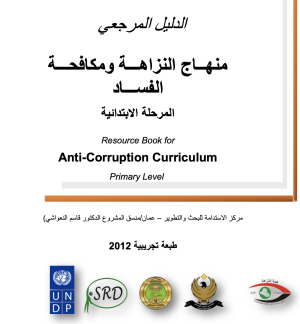
Anti-Corruption Curricula in primary and secondary schools – working sessions took place with UNDP, experts from SRD Center, and representatives from the Iraqi Ministries of Education (Federal and KR-I) and the Commission of Integrity on 20th August where need assessment, methodology and work-plan was agreed[1].

The final curriculum covered all learning subjects including mathematics, science, languages, civic education, history, geography and religious education. A technical committee of specialist was established and assigned for each school subject from the Ministry of Education (Federal and KR-I). The participants agreed that the curriculum is seen as the overall educational experiences that will be made available for children, including textbook, teacher and classroom teaching and extra-curricular activities, which will be planned and supervised by the school.

The final deliverable of this project was a Reference Guide that includes extracurricular activities – to promote the values of integrity and anti-corruption in the school curriculum that targeting school students and teachers. The new curriculum was not be produced as a separate learning subject as the current school timetable cannot accommodate any new topics as it will overburden the students.


Based on the agreed work-plan, a survey on all subjects at primary and secondary school levels took place to identify existing material on integrity, accountability and transparency. The result of the survey used to enhance the existing curriculum and introduce further material and extra-curricular activities for identified topics.


[1] Supporting Iraqi Compliance with the United Nations Convention against Corruption (UNCAC) and Combating Corruption at the Governorate Level, 2011.

Baseline Assessment of Women’s Business Skills in Za’atari Refugee Camp


The baseline assessment of business skills was designed to assess the capacities of women in Za’atari Refugee Camp in order to be used as a baseline for developing the detailed educational plan as well as targeted curricula aligned to the capacities of the participants.

A face-to-face individual interviews were adopted to collect data and information for this report, including qualitative and quantitative methods of analysis to data collected.


Based on the data collected, the following results have been achieved:

  1. Preparing the educational plan;
  2. Drafting the curricula and selecting the learning content, including the activities and worksheets; and
  3. Drafting the selection criteria of the participants and selecting the list of participants;


METHODOLOGY


Development of Data Collection Tool


SRD team grouped the relevant information planned to collect into the following categories: 

  1. basic information; 
  2. core business skills; and 
  3. business status. 


With guidance from UN Women staff, both in Amman Office and in the field in Za’atari Refugee Camp, who suggest changes and provide culturally appropriate guidance that would make our questionnaire easier to interpret and understand. Once we had a working draft of the questionnaire, we trained our field staff (enumerators) to conduct pilot interviews to ensure that the questionnaire questions were clear and relevant to the potential concerns of participants. Once we had a version of the questionnaire that we were all comfortable with, we translated it to Arabic language.


Field Research and Data Collection


We conducted rapid and extensive field research in Za’atari Refugee Camp during the last week of February 2017, in order to evaluate the current business skills and business status of women in Za’atari Refugee Camp. This information will be used to guide the design and development of the training program and to create a set of baseline metrics against which to measure future progress. Several specific quantitative indicators were developed based on the assessment results.


The qualitative information generated through the face-to-face interviews. Each respondent was informed of the purpose of their participation and the confidentiality of their responses. In order for the survey results to be generalized to the target beneficiary population, a minimum sample size of 80 respondents was critical. By the end of the field research, we had conducted 82 surveys among potential beneficiaries in the districts covered by UN Women in Za’atari Refugee Camp. The quantitative data was analyzed in Excel and SPSS. Percentages of the frequencies of different responses for each question were calculated in Excel while regressions, odds ratios, cross-tabulations were calculated using SPSS to draw relationships between responses to different questions.


RESULTS


Socio-Demographic Information


The ages of the women surveyed ranged from 19 to 58. The average age of the women surveyed was 35 years, with 40% of the women falling within the range of 31 to 40. The majority of the women were married (72%), one tenth of the women were widowed (11%), single/never married (10%), and a small percentage were separated/divorced (6%).


Marital Status

Frequency

Percent

Valid Percent

Cumulative Percent

Married

59

72.0

72.0

72.0

Never Married

8

9.8

9.8

81.7

Separated/Divorced

5

6.1

6.1

87.8

Widowed

10

12.2

12.2

100.0

Total

82

100.0

100.0


While 98% of women surveyed had attended school, the majority (67%) had not made it past preparatory school, which indicates that overall education levels are relatively low. Only women cannot read and only two women completed Bachelor degree.


Educational Level

Frequency

Percent

Cannot read

2

2.4

Elementary School

21

25.6

Preparatory School

32

39.0

Secondary School

24

29.3

Diploma

1

1.2

Bachelor

2

2.4

Total

82

100.0


Women’s Business Skills


The report concludes that women in Za’atari Refugee Camp are mostly caring for their families. These women struggle with a lack of resources, empowerment, and access to services. The women with whom we spoke are eager to acquire new business skills and to start their businesses. The following table shows the baseline level of each indicator we used in the assessment of the business development skills and capacities.

Sunday, 06 March 2022 00:02

Employability Skills “TOT” Workshop

World University Services of Canada, WUSC


Project Title: Women’s Economic Linkages and Employment Development (WE LEAD)


Introduction

Within the framework of the project ‘Women’s Economic Linkages and Employment Development (WE LEAD), WUSC has commissioned the consultancy firm Sustainable Research and Development Center (SRD) to conduct a training workshop on Employability Skills, Labour Market Assessment, and Networking benefiting 17 trainers form Vocation Training Corporation and Vocational Training Centers in Jordan. The training workshop conducted on 18 January to 1 February 2021 at the Abu Nsair VTC, Amman.


Key activities during the workshop

  1. Opening Session

On the first day of the workshop (18 January 2021), and after registration of participants, Ms. Alia Alrawashdeh, as a representative of WUSC, provides a short speech in which she presented a short introduction about WUSC and its goals in Jordan, and Alrawashdeh explained the objectives of the workshop and the importance of learning advanced skills on employability, labour market assessment, and networking. A team from WUSC provided daily follow up and support to the workshop, included Ms. Muna Makahleh and Mr. Mohammed Husban. Thanks for WUSC team who shared in many sessions their experience and contributed efficiently to the training activities to ensure that participants benefiting the maximum of the training workshop.


  1.  Key Training Sessions

During the 10-day workshop, the trainer facilitated a series of training sessions in order to improve the participants employability skills that young graduates from the VTC needs as cross-cutting professional skills, which are lacking in the VTC curricula. The main topics that have been delivered:

  1. Career guidance 
  2. Work Readiness
  3. Positive Thinking
  4. Team Building and Teamwork
  5. Effective Communication and Presentation Skills
  6. How to Market yourself (CV writing, Interview Skills)
  7. Labour Market Assessment
  8. Work Ethics and employee obligation


Key Results 

  • The training workshop has contributed in improving the knowledge, skills, and attitudes of the participants on employability skills, labour market assessment, and networking with stakeholders. This conclusion based on the written evaluation results (see section: Monitoring and Evalution).
  • The training workshop was a new partnership success story while the participants has been guided to develop new tools that should contribute in importing the institutional capacities of their departments. These tools included:
  1. Individual Employability Development Plan (خطة التطوير الوظيفي الفردية). This tools is to guide the trainees in the VTC from the first day they attend the training till after the graduation from the VTC.
  2. Curriculum Vitae Form (نموذج سيرة ذاتية) customized for VTC graduates.
  3. Job Interview Form (نموذج تقييم نتائج مقابلة العمل).
  4. Youth Data Collection Tool (استمارة جمع المعلومات من الشباب), and it has been built in Kobo Toolbox.
  5. Employer Data Collection Tool (استمارة جمع المعلومات من اصحاب العمل).
  6. NGOs Data Collection Tool (استمارة الجهات ذات العلاقة).
  7. Labour Market Assessment Plan (خطة تقييم سوق العمل).
  8. Career Path Evaluation Form (تقييم المسار المهني).


Promising Practices in TVET and Entrepreneurship Education in the Arab States
19–21 November 2013, Beirut, Lebanon 

Arab States

The Final Report has been compiled by Dr Sulieman Sulieman, Ms Lisa Freiburg, and Dr Qasem Newashi, SRD Jordan (consultant).

In response to the call of the Third Technical and Vocational Education and Training (TVET) Congress to collect and disseminate evidence-based policies and practices, the UNESCO-UNEVOC International Centre for TVET, Bonn, and UNESCO Regional Bureau, Beirut, in cooperation with the Ministry of Education and Higher Education, Lebanon (General Directorate for Vocational and Technical Education, GDVTE, and Center for Educational Research and Development, CERD), organized a three-day Regional Expert Meeting (Beirut, 19–21 November 2013) as a platform for networking and dialogue involving regional UNEVOC centres, TVET institutions, and other relevant stakeholders.

The goal of the Expert Meeting was to facilitate panels of experts for discussion and exchange of experiences by mapping contemporary issues and showcasing skills development strategies, evidence-based approaches, and innovative practices in the areas of youth, employment, and skills for business entrepreneurship; entrepreneurship education (EPE) and the use of information and communication technology (ICT); and regional/international cooperation and coordination on TVET merging issues and priorities (in other words, greening TVET).

The Regional Expert Meeting in Beirut was the last of a series of forums held in 2013. Kicking off in San José, Costa Rica, and soon followed by Abuja, Nigeria; Seoul, Republic of Korea; and Moscow, Russian Federation, the regional meetings facilitated high-level panels of experts discussing contemporary issues and highlighting skills development strategies, approaches, and innovative practices focusing on greening TVET and youth employment. These themes were identified in close consultation with the cluster coordinators of the network in earlier meetings in 2013.

Based on the invitations sent to the National Commissions for UNESCO in the Arab region, thirty- two officials and experts participated in the Expert Meeting, including representatives from Egypt, Iraq, Jordan, Lebanon, Libya, Sudan, Syria, Tunisia, United Arab Emirates, Yemen, Germany, the Republic of Korea, the United Kingdom, and Nigeria. Among the participants were representatives from UNEVOC centres, non-governmental organizations (NGOs), regional and international organizations, and the private sector.

In the three-day meeting, participants presented promising practices in TVET and shared their experiences by highlighting success stories on the introduction of entrepreneurship education (EPE)
and ICT in TVET. The promising practices presented
by UNEVOC centres in the Arab States underlined
the extent of educational reform in many of the countries, and revealed a number of recent initiatives dedicated to building linkages with the private sector, the training of teachers/trainers, and curriculum development for entrepreneurship and life skills.

In addition to national perspectives, UNEVOC Centre representatives from Nigeria, Germany, and the Republic of Korea gave presentations on regional activities in their respective regions focused on greening TVET and youth unemployment. Representatives from regional and international organizations, including the African Development Bank (AfDB)/London School of Economics (LSE), United Nations Economic and Social Commission for Western Asia ESCWA), and INJAZ, concentrated their presentations on policies and practices to tackle youth unemployment through TVET and entrepreneurship education.

The meeting highlighted the common challenges that are faced by many countries in the Arab States: increasing youth unemployment levels, poor linkages between education and training and industry, and a shortage of entrepreneurial youth who are sufficiently equipped to create their own jobs. Despite these issues, the focus was on sharing success stories and promising initiatives that could benefit others in the region. Working group sessions provided participants with the opportunity to engage in in-depth discussions and identify areas for collaboration in the region. The meeting demonstrated the willingness of different institutions to work closely together in tackling common issues in TVET. It emphasized the interest of participants in working together on the development of an ICT-based platform to facilitate the sharing of experiences specifically on EPE.


Also available at: https://unevoc.unesco.org/fileadmin/up/arab_states_regional_meeting_report_2013online.pdf 

Download full report


Within the framework of the World Vision Jordan (WVJ) Programme and as per its newly started project "Livelihoods Planning and Guidance for Youth in Jordan" which aims to contribute to the enhancement of employability of Syrian and Jordanian youth, WVJ commissioned this baseline study at four geographical areas in Jordan to provide vital information for the planning and programming for future similar interventions. Therefore, the baseline study initiated to provide the present status of outcome level indicators of the project to fine tune the set targets at the project level, where appropriate, based on baseline study results and recommendations, as well as set appropriate targets in the existing geographical areas and monitor the progress of the assistance given to the target youth more precisely.


Methodology

WVJ conducted the baseline study through the consultancy firm ‘Sustainable Research and Development Center’ (SRD). Data collection started on 1 December 2019 and ended on 15 January 2020.

A total of five indicators were measured by the baseline study through both quantitative and qualitative methods of data collection. In total, 231 youth were interviewed, and nine focus group discussions (FGD) and 13 key informant interviews (KIIs) with different stakeholders, including representatives from INGOs, governmental officials, and WV staff, were conducted. Four enumerator teams were trained to collect data appropriately to accomplish the baseline survey, and efforts were made to ensure data quality. Structured questionnaires were used for individual interview, FGDs, and KIIs.

Key Findings

In order to measure the capacity in livelihood planning and decision-making amongst youth, the baseline study revealed that only 19.5% of the targeted youth have the necessary skills and knowledge needed to enter the labor market with 60% of them being Syrians. The study indicated that 91 (39%) of the respondents have clear goal orientation, with almost equal percentages for both Syrians (51.5%) and Jordanians (48.5%).

To determine the youth ability to make informed career decisions, the baseline study indicated that only 57 (24.7%) young people had access to career counselling services prior to the project (56% Syrians and 44% Jordanians), while only 17 (7%) were aware of available jobs and training opportunities in their area. As for the skill set needed to enter working life, 72 (31.1%) youth respondents reported that they possess the necessary skills to enter working life, with no significant differences between Syrian and Jordanian youth. In regards to the geographical areas, the findings showed that the highest levels for most of these indicators are in Amman followed by Irbid.

Key Conclusions and Recommendations

It has been concluded that the lack of work experience is the most significant factor for youth unemployability. The main obstacle that prevented youth from getting a job is the lack of professional experience. Therefore, it is recommended that instead of focusing on creating permanent jobs for youth or livelihood opportunities, the best support that can be provided to the recently graduated youth is to link them to institutions relevant to their qualifications to get experience in their profession. This is because most youth recognize that employers are looking for young people who have experience as a top requirement regardless if they are hard-workers, have good qualifications, and possess a soft skill set. On the other hand, the lack of work experience has another negative effect on youth as they do not have the confidence to start their own businesses without this experience.

Based on the analysis of the data collected through the key informant interviews, mostly the labor offices in the governorates, and given the scarce job opportunities in the more traditional sectors, training service providers, especially vocational training centers, need to adapt and include new specializations to create new employment opportunities and business. Therefore, it is recommended 

to establish a cooperation between the development organizations and the governmental bodies, such as the Ministry of Digital Economy and Entrepreneurship and the Vocational Training Center to improve sustainable employment opportunities for both Syrian and Jordanian youth.

Finally , these conclusive findings support the project activities to create best fit livelihood opportunities as well as fine-tuning future interventions by shifting from the focus on providing business and soft skills such as work ethics, team work, leadership, communication, negotiation, decision making, and problem solving skills to incorporating tailored new technical skills such as hybrid car maintenance, mobile application development, and renewable energy related businesses and occupations. These emerging sectors have been identified as the skill gap between demand and supply in Jordan’s labor market. Other recommendations as per the project components can be found in the last section of the report.

Download the full report


Within the framework of “Inclusive Relief and Empowerment for Syrian Refugees with Impairments and Disabilities Project” in Jordan, the United States Department’s Bureau of Population, Refugees and Migration (PRM) funded a two-year project implemented by International Orthodox Christian Charities (IOCC) in partnership with Noor Hussein Foundation Institute for Family Health – IFH). The project was implemented between 2019 and 2021 in four locations in Jordan: Sweileh, Russeifa, Zarqa, and Irbid, aimed to improve the quality of life of refugees and vulnerable Jordanians with impairments/disabilities and their families. IOCC contracted with Sustainable Research and Development Center (SRD) to conduct this final evaluation. This report presents the findings from an independent evaluation conducted between September and October 2021. The evaluation aimed to analyze the final results of the project in the targeted areas, as well as to assess the efficiency, effectiveness, impact, and sustainability of the project after the implementation through the usage of quantitative and qualitative data.


The evaluation methodology included qualitative-quantitative data collection activities including desk review of project related documents, in-depth interviews and focus-group discussions with beneficiaries, and key informant interviews. Data were collected by the evaluation team and a team of enumerators who used tablets and Kobo Toolbox for data entry, and analysis. The procedures that were used included

A desk study, individual interviews, focus group discussions (FGDs), key informant interviews (KIIs). The evaluation team conducted a comprehensive desk research to highlight main project milestones and achievements, covering whole life of the project, while primary data collected through the 78 individual interviews and 8 FGDs conducted for men and women beneficiaries. An interview guide developed with several questions and additional probing questions to ensure all matters of interest to this study were covered. All qualitative feedback summarized thematically. All sessions conducted in IFH centers, lasting for approximately one hour and half. All participants mobilized by IFH staff and provided with a schedule and participant characteristics for each of the FGD. The characteristics of the participants have been disaggregated according to nationality, disability, gender and services received.  The evaluation team conducted 17 KIIs with stakeholders, including PRM Project Team of IOCC, IFH team, and Representatives from MoH and MoE using a semi-structured interview approach to gather information to address the research questions, as well as to inform on current and future trends and development schemes.


The evaluation findings showed that the PRM project met and exceeded the targets initially set, for all its indicators, of the project through IOCC/IFH four centers. Across the four geographical areas, Irbid, Russeifa, Sweileh and Zarqa, the key findings of the evaluation can be summarized as follows:

  • 6% of the respondents stated that the project services were very relevant or relevant to their needs, concerns and priorities.
  • 7% of the respondents stated that they were beneficiaries of IFH’s other services and project in addition to this actual project.
  • 7% of the respondents stated that they had received services from 6 months to 1 year in length
  • 5% of the respondents stated that the rehabilitation services were very effective or efficient
  • 4% of the respondents stated that the project helped them to engage more and develop better relations with their families.


Based upon the findings from the key informant interviews, focus group discussions and desk review, the following conclusions have been identified:

  1. More than 50% of the participants found that the service provided by the IOCC project were very relevant. There was a consensus from all the participants that they need these sessions, but they can't pay at private clinics, and they found that this project offers more than one service they need for free, and the most important they assured about the high skills of the specialists who gave the sessions.
  2. The PSS sessions and the rehabilitation sessions received a very high endorsement from those who received such services.
  3. The services provided were very appropriate and beneficial in terms of accurate diagnosis and evaluation, and they suited the needs of the beneficiaries, also the aids suited the beneficiaries and there is complete satisfaction with them. Most of the attendees were very satisfied regarding the information provided during the service period especially the home-based exercises information.
  4. Educating parents on the optimal and correct use of aids and how to install them, and guiding parents on how to conduct home activities that help beneficiaries.
  5. The majority of respondents stated that they feel as if they are better able to interact with family and friends as a result of the project.
  6. The project provided services in a humane manner, although the services were free, but this did not affect the quality of services, even if there were some observations, but in general the project was of great benefit, and everyone wanted to continue receiving services from the project
  7. Families have learned more about the role that they can play in support of their children with disabilities in order to help them develop in such a way that they will be able to integrate themselves into mainstream society.


Based on the evaluation findings and lessons learned, the evaluation team provided some recommendations summarized as follows:

  1. Encourage government participation so that in the future the government can assume a larger role in the delivery of similar services to families of children with disabilities.
  2. Continue to support families so that they develop the capacity to support their children with disabilities so that they can eventually integrate themselves into mainstream society.  This includes providing structured support for caregivers with knowledge of parenting skills to equip them to better understand and deal with CwD and certain stressors in their life. Customized training sessions or consultations is recommended such as on getting children engaged and keeping children engaged; helping children share engagement in play and home routines; promoting communication; preventing challenging behaviors; teaching alternative to challenging behaviors; problem solving; and self-care. Caregivers or family members with a disability would be provided with a protection package that include cash assistance taken into account in assessing their level of vulnerability.
  3. Consider expanding the length of the services that were provided to families and persons with disabilities so that the families can improve their capacity and persons with disabilities can benefit from such services.  Increase the length of services that are provided to families and persons with disabilities in order to improve their capacity and improve their ability to support the person with disabilities. 
  4. Ensure that the most PwD among vulnerable Syrian refugees and Jordanians in the target areas are included in programming. IOCC and its local partners need to review and update the procedures of how they identify and provide services to the most vulnerable refugees, including those residing in rural and remote urban areas in Jordan. IOCC needs to consider vulnerability in targeting criteria and track both targeting and service provision to these groups through devising or refining outreach strategies outlining how the most vulnerable refugees will be identified, targeted, and engaged. This may include increasing the provision of transportation so that the most vulnerable PwD may access and use services, possibly through mobile outreach teams. Other possible activities include using social media and local committees (refugees and host community members) to raise awareness and disseminate information about available services and possible referrals.
  5. Increase the length of time of the different training sessions as well as the number of training sessions that are offered so that a larger number of families and persons with disabilities can benefit.
  6. Design and implement activities in coordination with local and national authorities, as well as local Community Based Organizations (CBOs). Increase opportunities for improved communication and facilitation between line ministries and local CBOs to strengthen collaboration on programs and look for integration possibilities and inclusive education with existing structures. Therefore, more efforts need to be made to engage in partnerships with national authorities and local CBOs, for example, capacity building, involvement in data collection, and joint activities, service provision to PwD from refugees and host communities, as well as consider consulting with local authorities and CBOs can provide information on the experience of the host population and identify similarities and differences between host community and refugee needs and preferences.
  7. The training should focus more on the application of the knowledge and skills that staff are introduced to.
  8. IFH and other implementers need to focus on making the services accessible to all people who live the within the four selected communities. .
  9. There is a need to continue to offer similar services to families and persons with disabilities in the same and other communities so that families learn how to engage more effectively with their family members with disabilities.
  10. Implement the activities that the respondents have recommended such as increasing inclusive education, awareness raising, etc.
  11. Implementation of diagnostics, assessments and interventions accordingly will continue to help with the eye, hearing and physical improvement of all participants. 

With the rise of the Arab Spring, and increasing attention and activism to combat corruption within the Arab countries, it is critical to assess how state structures, environments, values and regional dynamics themselves impact the role of various sectors in leading such anti-corruption initiatives. Because of the increasing role that civil society has played in terms of combating and raising awareness to corruption during the Arab Spring era, this research attempts to assess what factors have influenced the level of this sector’s involvement both prior to and post 2011 Arab Spring in various Arab country contexts.


The results indicated that civil society organizations, for a long time, were distorted and underwent systematic violation by ruling regimes in order to restrict the emergence of any opposition movements. Therefore, the civil society sector in the Arab region has not been recognized, faced many violations and limitations of their freedom of expression, association, and their independence. Before the “Arab Spring”, civil societies in the Arab region had a concrete role on campaigning and advocating to ending the Israeli occupation, while after the ignition of the “Arab Spring”, civil societies in the Arab region seemed to overlook the previous goal and started struggling to fight corruption and put an end for the dictating ruling regimes. The “Arab Spring” was perceived as an alarming sign that Arab civil societies are ready to take over power for democratic changes and ruling of law.


The findings of this research will be used to formulate recommendations for key national and international stakeholders regarding programming and next steps. The researchers have employed an “Arab Lens” of analysis and conducted fieldwork in two case study countries, Jordan, Iraq, and Tunisia, to inform their findings and subsequent recommendations.


The evaluation of the Bosnia & Herzegovina Y - Peer Network project took place from 28th – 30th January 2008 and was undertaken by Steve Lambert and Julius Kanyamunyu. This report is based on the findings of the evaluation mission in BiH. The purpose of this evaluation mission was to observe and assess how the BiH network performed within the context of the wider Y-PEER Division for Arab States, Europe and Central Asia (DASECA) regional programme.

Within the framework of programming for young people and HIV/AIDS, the UNFPA has supported a number of behavior change initiatives, including peer education in general and Y-PEER in particular. Y-PEER is an innovative, comprehensive youth-to-youth education approach. It comprises a network of over 200 organizations and institutions, and encompasses thousands of young people, working in the broad areas of adolescent sexual and reproductive health.

The United Nations Population Fund (UNFPA) engaged the services of the Sustainable Research & Development (SRD) to perform an evaluation of YPEER (Youth Peer Education Network). The evaluation process required a number of teams (comprising two international consultants per team) to visit a 8 countries participating in the Y-PEER Programme. Visits to each country were brief (three days) during which time, consultants sought to gain a better understanding of the implementation of the programme nationally, its achievements and challenges. Key personnel representing the UNFPA, YPEER programme management and key informants (collaborative organizations, stake holders, peer educators) were interviewed during the course of the evaluation mission.

Prior to the field visit, evaluators received information from UNFPA HQ in New York, outlining the objectives of the evaluation mission This gave the evaluators an introduction to both the regional programme and what BiH had been doing on the national scene. The evaluators also received information, including the Evaluation Report of the BiH Y – Peer Network (Dec 2007), from the UNFPA BiH office.

Achievements

Much has been achieved and there is much to celebrate in the success of the Y-Peer Network in Bosnia & Herzegovina. It is an older network compared to other countries, being launched in 2003 as part of the UNFPA project titled: “Improving Sexual and Reproductive Health among Youth in BiH”. Through this project, the UNFPA BiH Country Office gave support in its Activity Plan to the development of Y-PEER Network, and establishment of youth friendly health services. This model – funding Y-Peer through youth friendly health services is still in existence today and has resulted in six NGOs actively involved in the network: Info Center Banja Luka, Info Center Bihać, Info Center Brčko, Info Center Mostar, Info Center Zenica and the Union of Medical Students BoHeMSA headquartered in Sarajevo.

It is evident from discussions with those young people involved with Y-Peer in Bosnia & Herzegovina that those involved are skilled, enthused and committed and deliver quality services and products through the network. Much has been achieved as the evaluation report by Maja Pecanac (Annex One) shows. Since the establishment of the Y-PEER network in Bosnia until today, the sum total of its activities around the country is as follows:

119,314 young people reached through the peer education sessions. 1,283 peer education presentations/session given regarding all relevant SRH issues. 437 community events in four cities (Bihać, Brčko, Mostar, Banja Luka) organized. 154,416 condoms distributed all over the country, in schools during the presentations or through outreach events.

A key outcome of the Y – Peer Network activity in Bosnia & Herzegovina has been the development of national standards in peer education. These have been developed and are yet to be adopted and implemented.

Challenges

However, given all the positive work undertaken by the Y-Peer Network, it operates in a very difficult and complex environment in Bosnia & Herzegovina. These have great impact on the network itself and the on the ability of the network to undertake its desired activities.

Primarily BiH is formed of the Federation of BiH, the Republika Srpska and Brčko District. Federation is de-centralized and contains 10 autonomous cantons, while Republika Srpska is highly centralized, and Brčko District has specific political administration. Such highly fragmented political structure blocks progress in Bosnia and Herzegovina, and sexual and reproductive health suffers grave consequences as well. In addition, there is competitiveness among NGOs that work in SRH and among UN agencies. There are also negative impacts from adult views of young people and of peer education.

The overburdening hassles of competitors, NGO squabbles, government bureaucracy at the National, Republic and Canton levels seems to overwhelm those peer educators involved in this area. The level of enthusiasm seen in other areas was ‘dampened’ in BiH. Added to this the lack of organised activity in HIV, STI and SRH and the lack of acknowledgement of the legitimacy of the voice of young people mean that the ongoing development of Y-Peer in Bosnia & Herzegovina is fraught with difficulty.

It is for these very reasons that Bosnia & Herzegovina needs the Y-Peer Network more now than it did in the past. The Y-Peer Network, with appropriate resourcing, ownership, leadership, governance and management, can make an enormous difference to this country.


Within the framework of UN Women mission in Iraq, the current project “Gender Review and Analysis of Ministry of Education (MoE) Policies, Strategies, Curricula and Textbooks” designed to review the education policy documents, curricula and textbooks used in basic education (grades 1 to 9) in Kurdistan Regional Government (KRG) as well as an analysis of classroom processes to determine the gender sensitivity of the basic education. The study looked at current Ministry of Education overall policies and strategies and reviewed their gender sensitivity in addition to looking at both the content of curricula and textbooks and present policies and strategies for classroom delivery.

The assessment covered the following four main components: 1) Gender mainstreaming in Educational Policies and Strategies; 2) Gender sensitivity of the Curricula and Textbooks; 3) Gender mainstreaming in Classroom Settings; and 4) Gender mainstreaming in Accelerated Learning Programme (ALP). This study has been conducted using four different assessment tools to gather qualitative data. The study team interviewed the MoE focal points in Erbil, assessed 6 selected primary schools, visited 3 selected ALP schools, analyzed 26 selected textbooks (Annex 3), and finally organized a workshop to discuss the findings with the focal points team. The key findings of using assessment tools and study activities can be summarized as follows:

Findings Related to Gender mainstreaming in Educational Policies and Strategies

  • Although girls represent almost 47% of the students in the general KRG schools, they make up only 34% of those who finish the primary cycle.
  • There was almost no reference to gender in the MoE strategies, plans, and activities. However, the education partners implemented psychosocial activities, hoping to establish a general understanding of common vocabulary, goals and best responses to gender issues within psychosocial programming. MoE focal points would like to bring all stakeholders together to talk about psychosocial and the difference between female/male needs and experiences.
  • No real psychosocial teacher training to date.
  • There is a need for Vocational Training, sector still underdeveloped and MoE would welcome technical expertise/ideas/projects, with special focus on girls related specializations.
  • Mixed schools exist in most governorates of KRG, but they are perceived as a hindrance to girls’ education.
  • There are no other alternatives for girls who have either dropped out of school or never enrolled. This is of particular concern for those girls who live, or have lived, in areas experiencing great insecurity and very remote areas such as the disputed areas.

Findings Related to Gender sensitivity of Curricula and Textbooks

  • School curriculum and textbooks in Kurdistan region are mostly modern textbooks and well-designed based on the world’s best practices. In fact, the science, math, and languages textbooks are copied from other countries textbooks, such as Sweden and US.
  • Science, math, and languages textbooks have s been imported to Kurdistan regions without proper modification to reflect the Kurdish culture, for example the names and pictures are still the same foreign and not related to the Kurdish culture.
  • Science, math, and languages textbooks have been imported to Kurdistan regions because there are no enough experts in Kurdistan who can develop school textbooks for these school learning subjects, the MoE focal stated.
  • Subject experts in the curriculum department have never received training in gender mainstreaming. Mr. Araz Abdullah1 indicated that they have integrated gender related concepts in all school textbooks, and this task has been carried out intentionally according to the MoE strategies that respect gender equality. The number of women employed in the curriculum department are more than men.
  • As for humanitarian school subjects such as civic education, languages, and religion, they are all developed by national teams from KRG.
  • In general, school curriculum and textbooks in Kurdistan region are free of gender bias, except very small notions.
  • Different portrayals and stereotypes of the sexes exist in the school textbook. The man represents the power, intelligence, and decision maker, while the women are passive recipients of the orders, money, and always in need for the man’s support. In the Human Rights Textbook, Grade5, Page 31, you can see in a picture a man sitting in his office while a woman (girl) stands in front of him like a slave while she is informing him of a complaint.
  • Curriculum Reform in KRG during the last three years covered the delivery of new textbooks, such as English Curriculum and Math and Sciences.
  • Sex education is a real need but difficult in KRG context.

Findings Related to Gender Mainstreaming in Classroom Settings

  • Teacher Training in KRG was identified by every stakeholder as a major gap.
  • School children in KRG carry excellent textbooks, but mostly they do not have qualified teachers inspire them to learn from these textbooks. Teacher trainers have had little access to modern teaching and methodologies as well as limited access to articles/professional papers in their specialization.
  • Other findings from the assessment show that the Arabic schools in the city of Erbil do not have enough space to meet the demand. Because of this, all of the classes are overcrowded.
  • One of the biggest gaps is Water/Sanitation (and, in turn, disease prevention), many schools are dilapidated and have no functioning sanitation facilities.
  • No toilets in some schools in the contested areas which prevented girls from attending school.
  • Overall, the assessment showed a need for PTAs in all the schools. This was echoed by both staff and parents.

Gender Mainstreaming in Accelerated Learning Programme (Please find the detail findings and recommendations for the ALP programme in KRG in Annex 4).

Based on the analysis of the findings, several recommendations for the government in KRG and recommendations for future programming for UN Women/UNICEF in Iraq are drawn. Recommendations also include proposed activities for achieving gender equity at basic education level, which focused on ensuring that staff in the Ministry of Education in Erbil are trained in gender equality issues and that teachers have training on how to manage classroom processes in a gender sensitive manner.


1. The Study

1.1 Purpose and Structure

The purpose of the study is to identify opportunities for women to engage in Oxfam’s CFW across Za’atari Camp.

The specific objectives of the research were to:

  • Review existing Oxfam CFW posts that can be targeted for women;

  • Identify key barriers (physical and non-physical) to women’s participation in CFW as well as key strengths for women engaging in CFW activities implemented by Oxfam;

  • Propose possible interventions to overcome existing barriers and build upon possible strengths; and

  • Propose new semi-skilled and skilled CFW activities which can engage women in Za’atari Camp, with a specific section exploring the potential of activities linked to Oxfam’s recycling operations.

This report focuses on Syrian women refugees in Za’atari Camp and aims to add further insights into women’s livelihoods, evolving socio-cultural dynamics, and mechanisms of inclusion in CFW activities. Building on previous studies conducted by Oxfam and other INGOs, the research specifically explores how emerging social trends and local relations affect women’s participation in CFW activities (in particular SWM and recycling), and how this is further influenced by other aspects of women’s lives (e.g. access to child care). In conclusion, the report suggests action points to tackle the identified obstacles.

The report is structured as follows. This section lays out the scope of research and methodology used. Section 2 sets the context of the Za’atari Camp and Oxfam’s CFW activities. Section 3 presents the findings looking at the key barriers to women’s participation in CFW. Section 4 makes recommendations in particular with regard to Oxfam’s SWM and recycling projects.

1.2 Methodology and Limitations

The study was conducted during September – October 2018 and drew on desk research as well as qualitative field research in Za’atari Camp (Districts 6, 7, 8, 11).

Fifteen semi-structured focus group discussions were organized between October 7-19, 2018 with 88 respondents (33 women and 55 men). The research team developed interview protocols including a list of questions and additional probing questions to ensure that all aspects pertinent to this study were covered. All FGD protocols are attached as Appendix 1.

All sessions were conducted at Oxfam camp base and each session lasted for approximatively one hour and half. All participants were mobilized by Oxfam Community Mobilizers in the camp, who also provided the research team with a schedule and participants’ characteristics. Additionally, interviews with Key Informants including Oxfam, NRC, LWF staff were conducted2. Overall the study was conducted as planned and no major incidents occurred. However, the research team would like to note the following limitations:

  • Logistical aspects: due to difficulties related to obtaining camp access permits, three focus group discussions could not be held (18 FDGs were planned in total, 15 FDGs were held). Given the time constraints, the FGDs could not be rescheduled. However, the research team considered that the sample that was interviewed (88 people) was representative enough to draw conclusions. Triangulation of information showed that answers given did not vary much between groups (both male and female) so there was no need to hold extra meetings.

  • The nature of the study: this is a qualitative study, which has a deliberately exploratory nature. The research team did not conduct surveys and the numerical / quantitative data in this research come mostly from secondary sources. The research team considered that even though the number of respondents that could have potentially been reached through door-to-door surveys might have been higher than the number of participants in FGDs, the possibility to discuss aspects in more detail and have a direct communication with Za’atari camp inhabitants was chosen as the preferred way of collecting data. Our focus was on going into deeper analysis of the underlying reasons for the identified obstacles rather than colleting a list of pre-defined options / answers. The research team considered that the FGD approach generated a richer picture of women’s evolving norms and economic lives, and different challenges faced, even though only collective / group estimates were gathered on women’s participation and remuneration, and this data remain less precise in terms of the more quantitative dimensions of women’s involvement in CFW.

1.3 Sample Demographics

The sample included Syrian women and men living in Za’atari camp of various age groups (from adolescents to the elderly, the youngest participants were in their early 20’s and the oldest in their mid-80’s). Separate FGDs were held for men and women, who were grouped into two age categories (below age 30 and age 30 and older), and according to their CFW status (those who never participated and those who were involved in CFW).

Marital status: 85% of the respondents reported being married with three to six children (this number includes divorced /separated persons, and widows). 96% of males involved in this assessment defined themselves as responsible for a household with an average of six family members. 15% of female respondents were single women, with no other family members.

Education: Most of respondents can read and write in Arabic but not in English, the level of education did not vary substantially between men and women in the sample (secondary school). Most men had been involved in agricultural / farming work prior to coming to the camp and all women did not work / had household duties.

Page 8 of 10

Contact us

Queen Rania Street
36, Amman 11941, Jordan
M: +962 782768400
Email: srd@srd.edu.jo

Our Location

Sitemap (XML / HTML)